


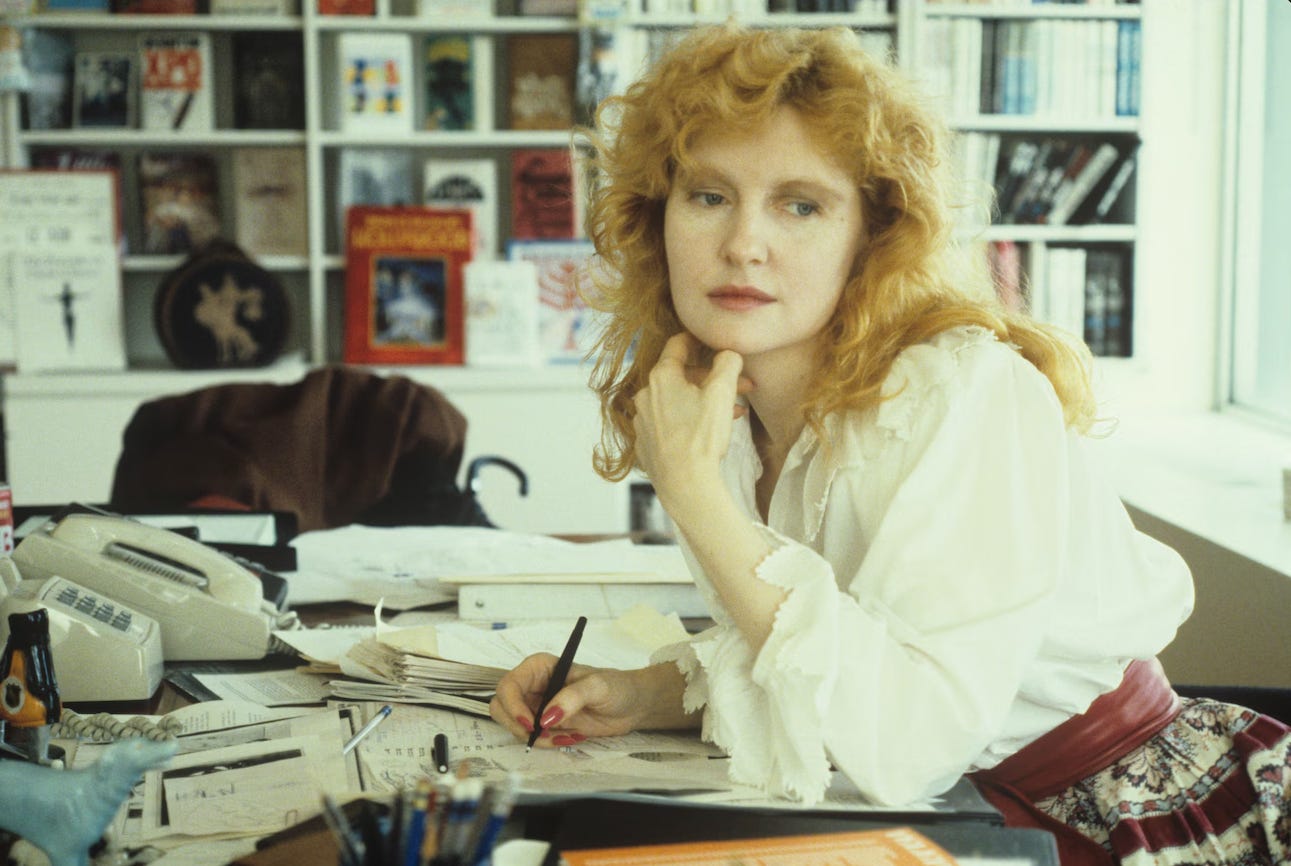
Chances are, you’ve never heard of Shere Hite. I hadn’t, until six months ago.
Somehow, across my studies and readings as a sexologist, Shere’s name never came up.
It wasn’t until watching Fifty Shades of Grey last October that I fell into a Dakota Johnson rabbit hole and learned she had produced and narrated a documentary called The Disappearance of Shere Hite.
A whole documentary about one of the bestselling sexologists of all time whose forgotten name is, unfortunately, no accident.
So it feels right that on International Women’s Day, I share the story of a woman who changed how we understand female pleasure—and then slid out of the public eye.
This is a story about sex research, yes.
But it’s also a story about what happens to women who insist that their experience counts as evidence.
From Missouri to Manhattan
Born Shirley Diana Gregory in 1942, in St. Joseph, Missouri, she grew up in the American Bible Belt, raised by her grandparents after her mother had her at sixteen.
She earned a bachelor’s and master’s in history at the University of Florida before moving to New York City for graduate work at Columbia University.
To pay for her education, she modeled. Sometimes for book illustrations, sometimes for magazines, and—famously—for an Olivetti typewriter ad with the tagline, “The typewriter is so smart, she doesn’t have to be.”
When she found out about the tagline after she’d already shot the ad, she was enraged.
Shere joined feminists from the National Organization for Women (NOW) to protest, and that act became a hinge in her life: the woman used as a prop in a sexist ad crosses the picket line and becomes part of the movement to dismantle it.
From there, she moved deeper into women’s liberation work and, eventually, into sex research.
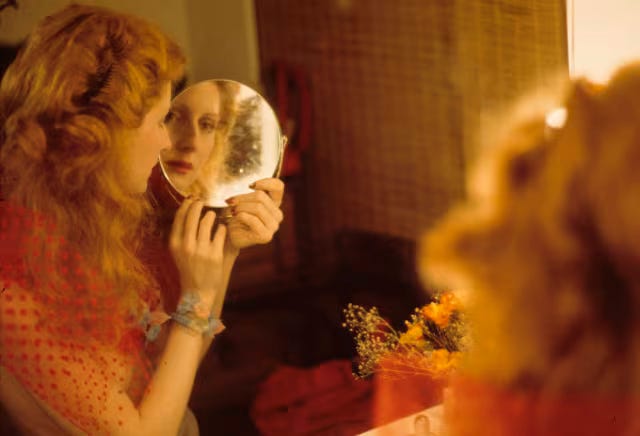
In the early 1970s, there were already big names in sex research: Kinsey, Masters and Johnson, all mostly focused on bodies as observed from the outside, in labs, through the lens of penetrative sex.
But at a NOW meeting, a conversation about female orgasm exposed something glaring: we had almost no data on women’s own experiences of pleasure in their own words.
Hite’s response was simple, yet subversive.
She took her graduate research training and wrote a long, open‑ended questionnaire—over sixty questions—and started handing it out to women, asking them to describe, in detail, how they felt about sex, orgasm, masturbation, relationships, and their bodies.
At first she distributed the surveys by hand around New York City, even enlisting her boyfriend and his motorcycle to ferry questionnaires around the boroughs.
She published an earlier book, Sexual Honesty, by Women, for Women, and used it to reach more respondents, then advertised nationally and invited women to mail their responses back.
Printing these surveys was not easy.
Shere found a publishing company that allowed her to print after hours, on her own dime. She wanted women to feel like they were writing in a diary, so she added colors and design elements to make it warm and inviting.
Out of roughly 100,000 questionnaires, about 3,000 came back in enough detail to analyze.
In 1976 she published The Hite Report: A Nationwide Study of Female Sexuality.
The book became an immediate bestseller, and remains so, with over 50 million copies sold worldwide.
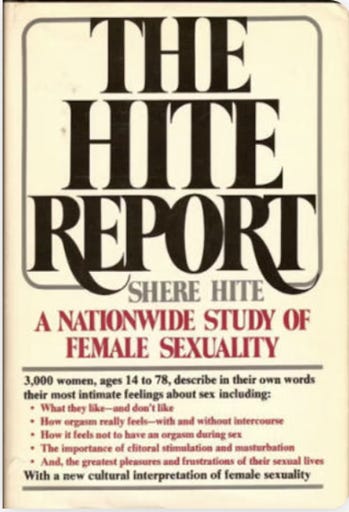
The headline that made her famous—and infamous—was that about 70% of women in her study did not have orgasms from intercourse alone, but were able to orgasm easily via masturbation or other direct clitoral stimulation.
In other words: the problem is not women’s bodies.
The problem is what we’re calling “sex.”
Women at the time felt seen, reassured, even vindicated.
Men felt mocked or threatened. Playboy dubbed it “The Hate Report.”
Reading Hite now, it’s striking how obvious this sounds.
But nothing about it was obvious in 1976, when Freud’s old binary—”vaginal” orgasm as mature, “clitoral” as childish—still haunted women’s understanding of how they “should” experience pleasure.
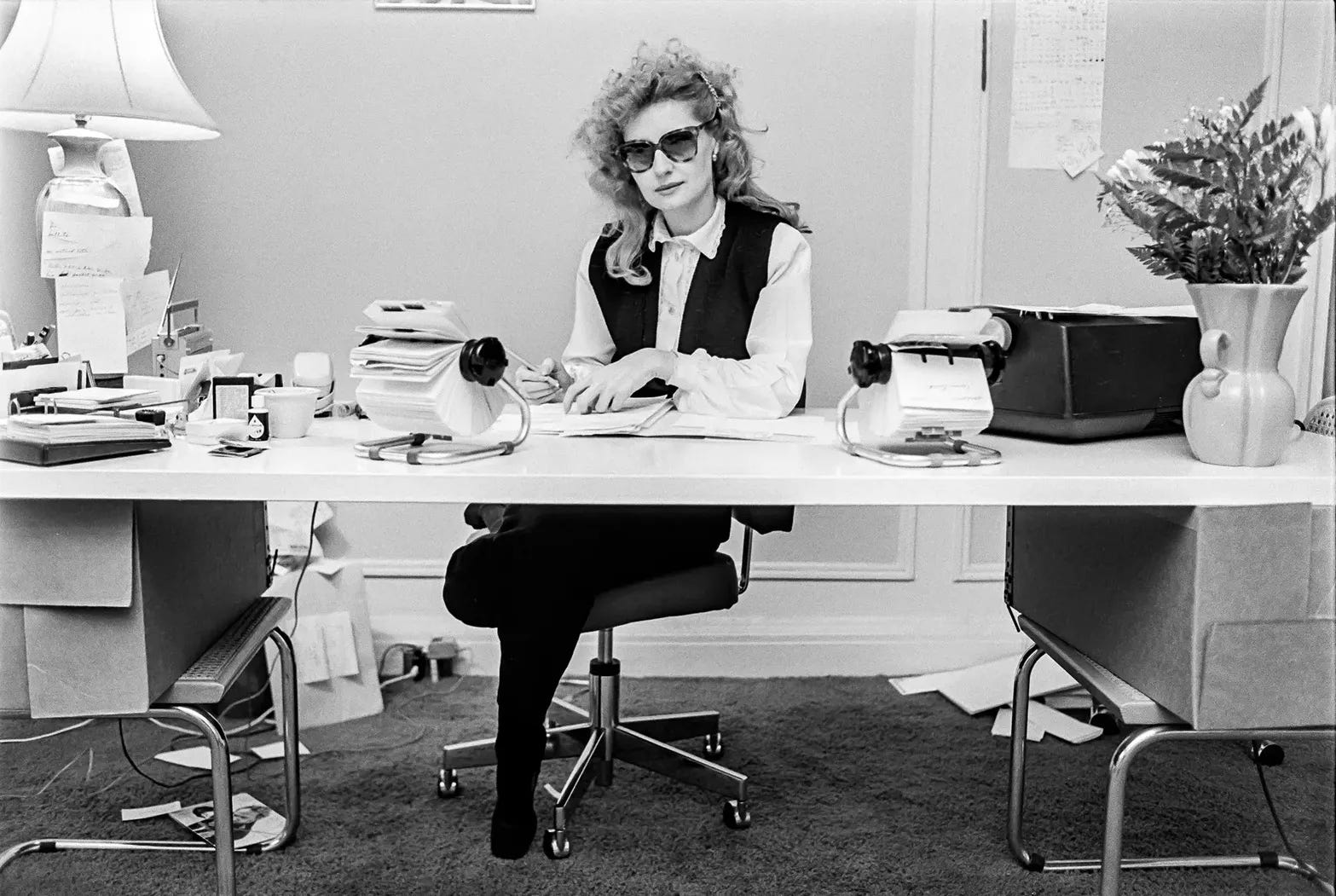
Here’s the part of the story that becomes uncomfortably familiar.
Hite’s work was attacked from multiple angles.
Methodologists criticized her sampling and statistics, arguing that self‑selected respondents could not stand in for “American women,” making the data suspect.
Media figures mocked her as hysterical, man‑hating, unscientific.
Television appearances became gauntlets.
In one clip in the documentary, she sits on The Oprah Winfrey Show facing an all‑male audience that openly berates her.
On another program, she’s ridiculed and interrupted as she tries to explain her findings.
At the exact moment when she had given millions of women a language for their pleasure, she was being publicly punished for her audacity.
The criticism wasn’t just, “We have questions about your methods.”
It was: Who do you think you are?
Her past as a model who posed nude was dredged up and used to discredit her.
Over time, the attacks escalated into a decade of sustained assault on her and her work.
She became the scapegoat for anxieties about porn, feminism, divorce, changing gender roles—everything that made people uneasy about the sexual revolution.
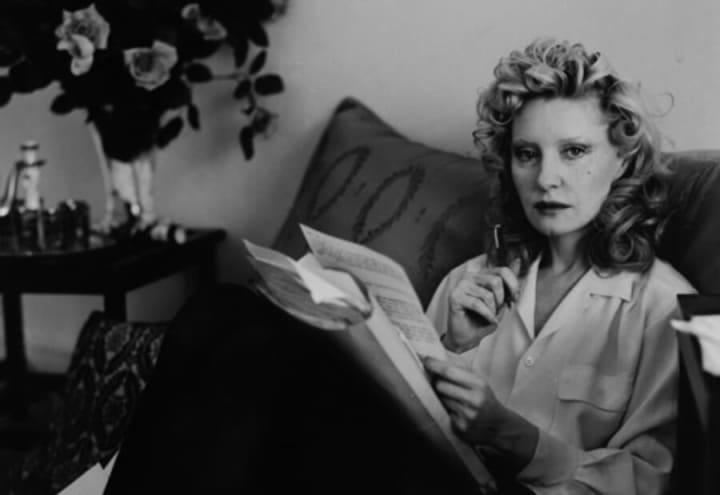
Double standards
As Hite’s critics loved to frame her as unscientific, they held up Masters and Johnson as the gold standard in contrast.
The irony? Masters and Johnson’s landmark 1966 study was based on lab observations of 694 volunteers—much smaller than her sample of 3,000, which proved to be more representative of American society at the time.
And while Masters and Johnson did conclude—crucially, against Freud—that there is no physiological difference between a “vaginal” and a “clitoral” orgasm, they also noted that internal clitoral structures extend beneath the labia, meaning penetration could stimulate the clitoris indirectly from the inside.
The broader culture absorbed this as “penetration works,” conveniently glossing over the word clitoris.
Hite, by contrast, was relentless about what that actually meant for women’s lived experience: if most of you aren’t orgasming from penetration alone, then penetration-centered sex is not serving women.
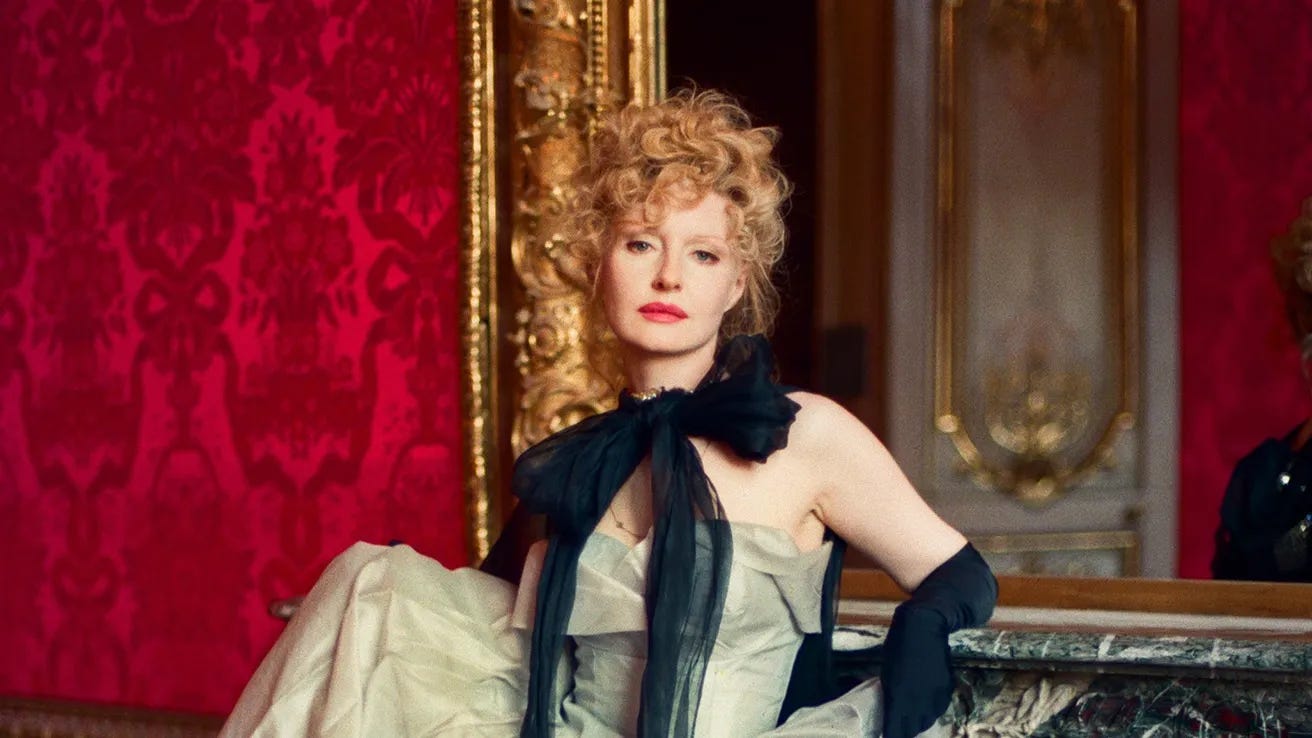
But before the backlash, there was a spectacular rise.
The Hite Report made her rich. She moved from her cockroach-infested apartment, repaying everyone who had helped fund the research, and landed on Fifth Avenue—the same building Gene Simmons called home.
She also used the funds to continue investing in her research, committed to self-funding her work on her own terms, beholden to no institution that might redirect what she could ask or say.
Public crucifixion
And it didn’t stop with the first Hite Report.
In 1981, Hite published The Hite Report on Male Sexuality, and again she did what she always did: she asked men, in their own words, to describe their emotional and sexual lives.
More than 7,000 responded to the survey, reporting not feeling safe being emotionally vulnerable, craving more emotional support from their relationships, and experiencing loneliness within their own masculinity.
We know today that these are very real consequences of socialized masculinity—the research on male emotional suppression, the mental health crisis among men who can’t ask for help—it’s one of the most important conversations in psychology right now.
But in 1981, when male TV hosts interviewed Hite about it, they didn’t say, “Wow, that’s concerning.” They said, “The men in this book don’t sound like men I know.” And with that, they discredited both her and the men who had trusted her enough to tell the truth about their inner lives.
Shere Hite couldn’t win either way.
We love the language of empowerment; we’re less comfortable with the women who actually do the empowering.
Exile
Eventually, the pressure and death threats became unbearable.
In 1989, Hite moved to Germany with her husband, Friedrich Höricke, a concert pianist nineteen years her junior.
From there, she continued to write and publish—eventually on families and even her own memoir, The Hite Report on Hite: A Sexual and Political Autobiography.
But from the American mainstream perspective, she essentially vanished.
Her name receded, even as her ideas seeped into sex education, therapy, and the way we talk in bed.
She died in London in 2020, at 77, having lived for years with Alzheimer’s and Parkinson’s disease.
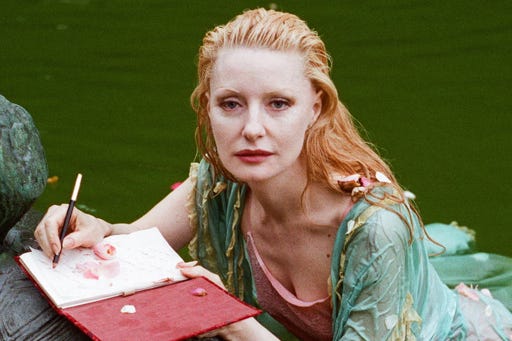
I feel a very particular tenderness towards Shere.
Like her, I came to this work through New York City. I also studied at Columbia University, and have had a sharp taste of what happens when you say something true and inconvenient about women’s pleasure out loud.
When my piece on “The Burden of Maintenance Sex” went viral, the responses that came in weren’t just disagreement—they were personal, corrosive attacks designed to make you wonder whether it’s worth continuing. She received that a thousandfold, for decades.
So on International Women’s Day, I want to remember Shere for the pioneer she was—and for paving the way for women like me to do the work I love today.
She won’t be the last woman in this series whose name you should know, but she’s the right one to start with.
If you’re curious about learning more, I invite you to watch her documentary The Disappearance of Shere Hite. It’s so well-done and what I’ve shared here is just a glimpse of her story.
And order The Hite Report or any of her other books. She poured her heart into them.
Whenever you’re ready, here are 2 ways I can help:
Couples Intimacy Card Deck - Turn each other on, one question at a time. I created this for you and your partner to bring more connection, curiosity, and play into the bedroom. Get 10% off with code LUST.
Book a 1:1 Session - I help individuals and couples in long-term relationships find more desire, confidence, and connection—in and out of bed. One private hour, and you leave with a clear plan for what to do next.
Thank you for reading Lust in Translation. If you think anyone else would enjoy reading this too, please share it with them.
Her legacy is so underrated. Her survey is so full of depth and context, she was a trailblazer in terms of telling women’s stories.
wonderful piece!!!!!